

BRUSH WORKSTATIONS
Build your own table of
protection
Create a scratch-free working surface for fabrication, assembly, inspection, and material handling.

Table Brush Tiles
Our modular brush tiles allow you to build durable workstations that protect delicate materials during processing. Whether you’re handling sheet metal, painted components, glass, or finished parts, brush surfaces allow materials to move freely while preventing scratches and damage.
Brush workstations are commonly used for fabrication benches, inspection tables, and material handling areas where protecting finished surfaces is important.
They provide a smooth, low-friction surface that protects sheet materials or other materials during handling, processing and finishing.
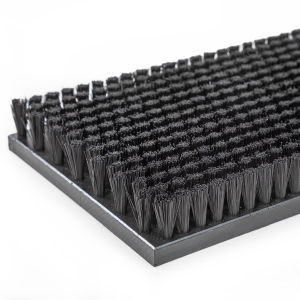
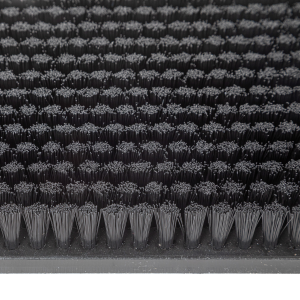
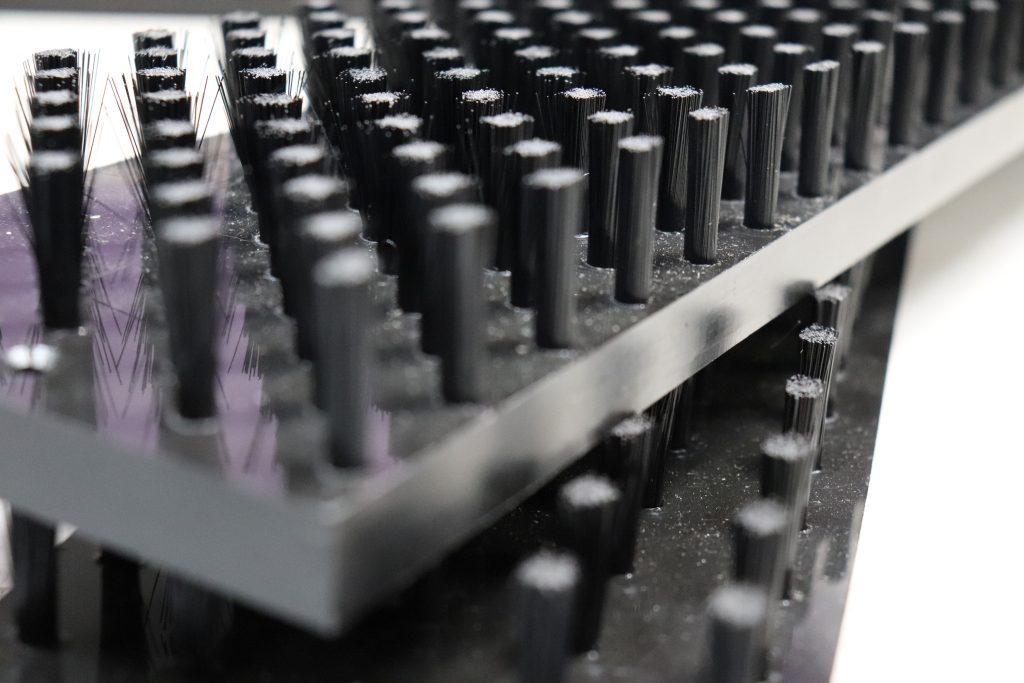
Standard 500mm x 150mm Brush Tiles
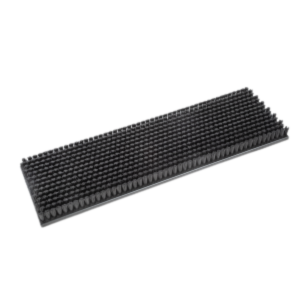
Standard 500mm x 100mm Brush Tiles
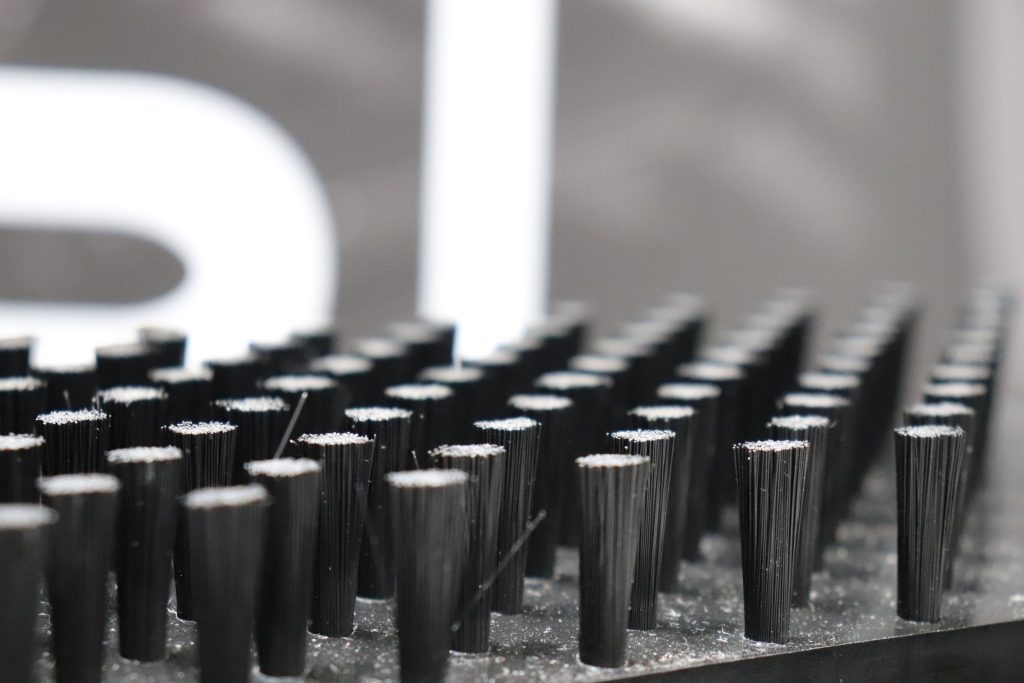
Our Standard Options
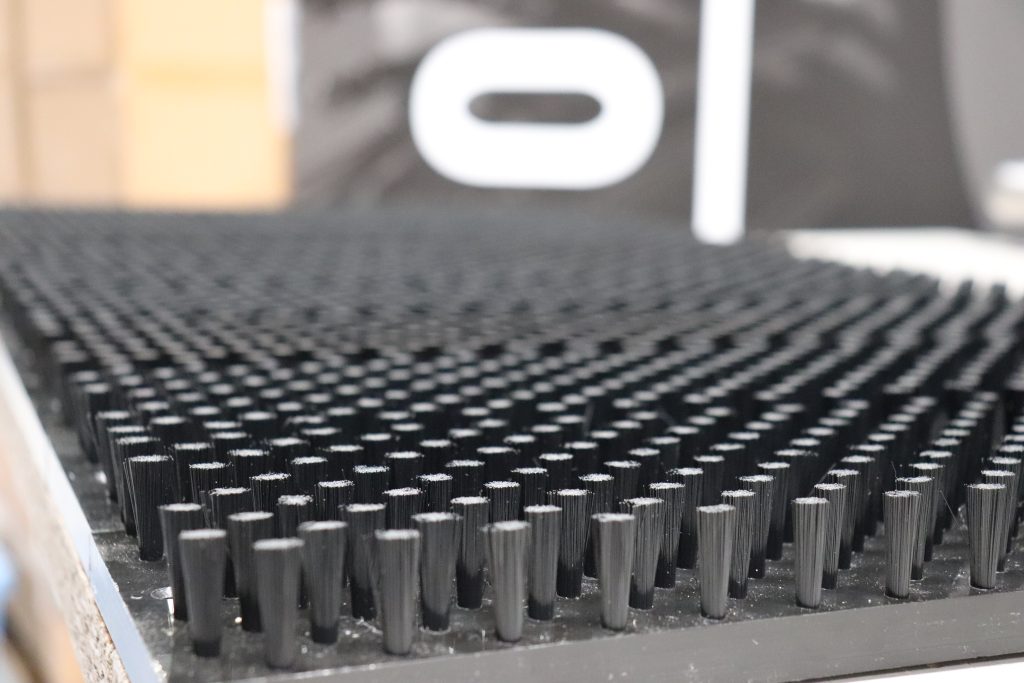
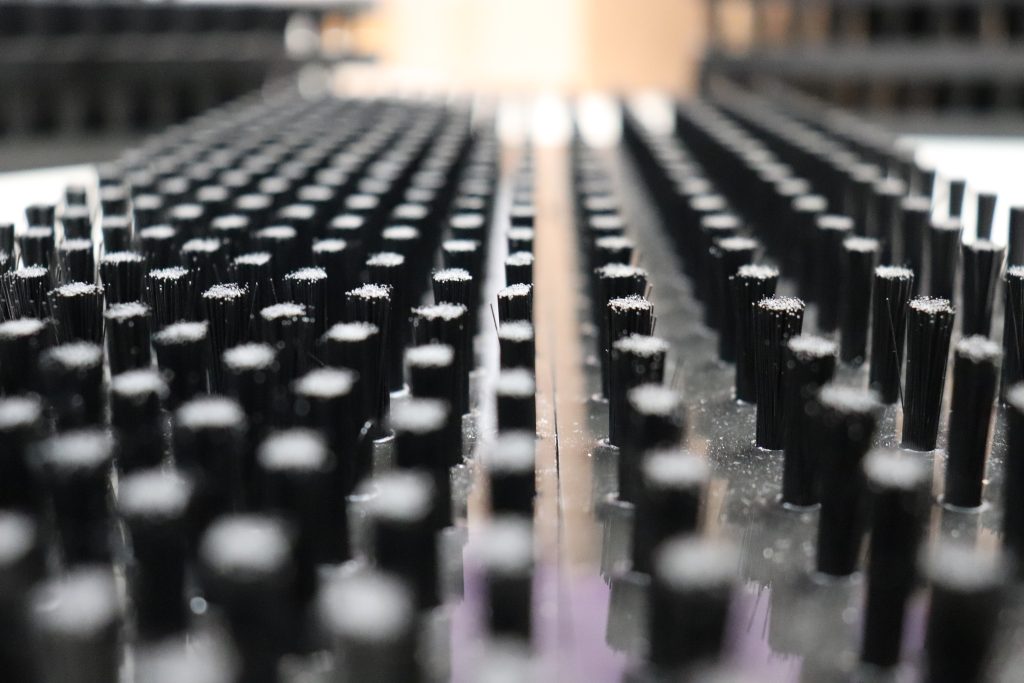
1) Staggered standard pattern – load bearing weight 35kg per square metre
2) Linear (straight) standard pattern – load bearing weight 35kg per square metre
3) Linear (straight) dense fill pattern – load bearing weight of up to 120kg per square metre
Each tile is produced with black HDPE Board with 0.3mm diameter black nylon bristle trimmed to 20mm on dense fill and 12mm on standard patterns.
Custom options are available as follows:
Any base board type – Brass, Aluminium, HDPE, aluminium composite or UHMW
Any brush fill pattern – Staggered, Linear, Angled or Dense (compact) depending on the load bearing weight required.
Any brush filament – Black or white Nylon, Brass, or Flame-Resistant Nylon or Polypropylene.
Any bristle trim length depending on your application.
Frequently Asked Questions
Can brush tables solve my issue with scratching and marking?
A: Yes. Brush tables are a proven solution for reducing scratching, scuffing, and surface blemishes that can occur during sheet metal fabrication and material handling processes.
By supporting materials on flexible brush filaments rather than hard surfaces, parts can move smoothly across the table while minimising metal-to-metal contact. This helps protect finished surfaces throughout cutting, handling, and processing.
In addition to improving surface protection, brush tables can also help reduce noise and vibration within the working area.
What Are the Benefits of Using Brush Surfaces on a Workstation or Transfer Table?
Traditional surfaces such as carpet, foam, or plastic sheets can trap dust, chips, and other debris, which may lead to scratching or marking on finished materials. Roller ball systems can also cause surface damage and often generate significant noise during operation.
Brush surfaces provide a more effective alternative. The individual filaments support the material while allowing debris to fall away from the working surface, helping to maintain cleaner contact and reduce the risk of scratching. They also allow parts to move smoothly across the table while operating much more quietly than roller systems.
How Do They Attach to My Surface?
Brush panels can be securely fixed to a wide range of work surfaces using standard screws or bolts. Our standard brush tiles are supplied with a countersunk bolt hole at each end for straightforward installation.
Where required, we can also manufacture panels with through holes, counterbore, or additional countersunk fixing options to suit your specific mounting requirements and workstation design.
What Sizes Do You Offer?
We supply standard brush tiles from stock, making it easy to quickly build or replace sections of a brush table or workstation.
In addition to our standard tiles, we can also manufacture custom-sized panels to suit specific table layouts or applications. We also produce replacement brush panels for turret punch machines, designed to match industry-standard sizes and configurations.
If you require a particular size or layout, our team can help provide a suitable solution for your equipment.