
CASE STUDY: Skillet Cleaning System – Nissan
Reducing Downtime and Boosting Efficiency: A Custom Skillet Cleaning Solution for Nissan’s Production Line
Nissan, the renowned Japanese car manufacturer, operates on a global scale with over 131,000 employees as of March 2023. Since its opening in 1986, the Sunderland-based Nissan Motor Manufacturing (UK) Ltd (NMUK) has been a key player, producing a car every two minutes, day in and day out, for 37 years. Today, the Sunderland plant is at the forefront of Nissan’s vision for a zero-emissions future, producing electrified models like the Qashqai e-POWER, Juke Hybrid, and the fully electric Nissan LEAF. With over 50,000 Qashqai e-POWER and 20,000 Juke Hybrid vehicles already built, the plant is accelerating its sustainable goals through the EV36Zero project. This initiative includes the development of a new electric vehicle, a battery gigafactory, and a renewable energy microgrid.
The Challenge
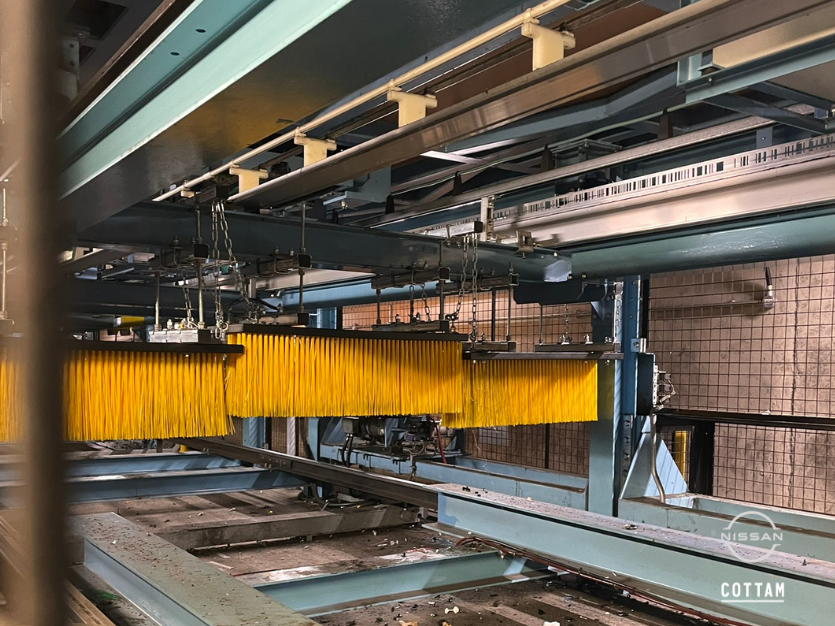
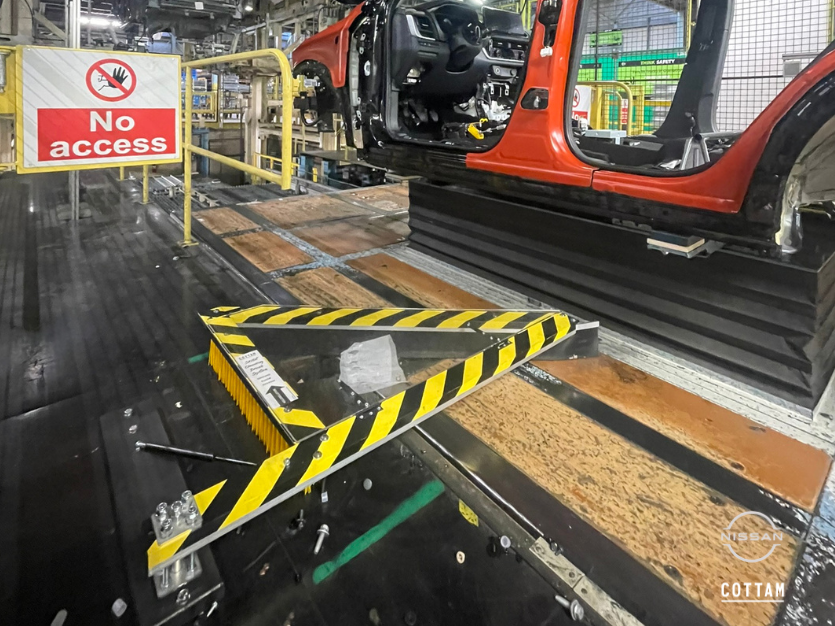
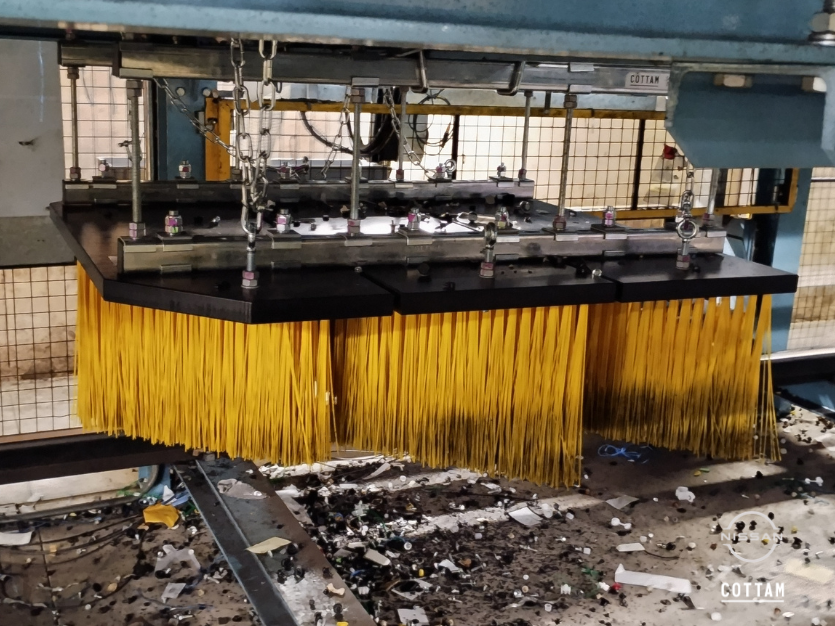
At the end of 2023, Nissan Sunderland reached out to Cottam with a specific issue they had been battling for over a decade. Debris build-up on their skillet conveyor—a system that moves vehicles during assembly—was causing their light guards to trip, bringing the production line to a halt. Not only was this an inconvenience, but it was costing the company thousands of pounds in downtime. Nissan needed a reliable, permanent brush system to prevent debris from accumulating, especially in the pit area (the underground section where the skillets move from the end of the line back to the start). They were looking for a custom solution that would fit seamlessly into their existing setup.
The Solution
This was a custom project that required precise design and engineering to integrate smoothly with Nissan’s current skillet system, all while minimising disruption. Cottam’s team got to work on creating multiple brush system concepts, working closely with Nissan’s engineering and Kaizen teams to ensure the designs met their specific needs.
The Process
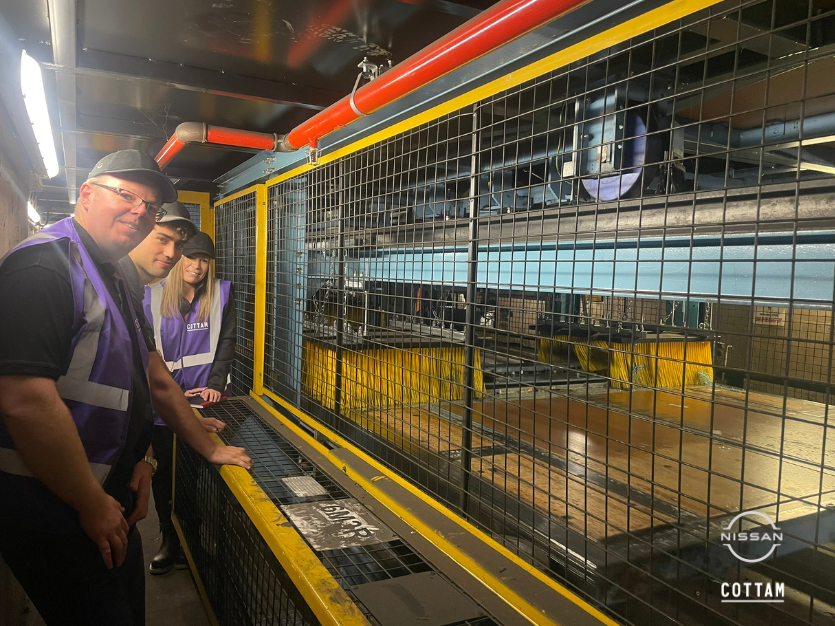
- Discovery Call & Site Visit: After an initial call with Nissan’s team, Cottam arranged a site visit to fully understand the skillet system in action. Measurements were taken, and potential challenges were discussed to ensure the project started on the right foot.
- Design Concepts: Cottam’s in-house design team developed a range of innovative systems. These were presented to Nissan for feedback, ensuring that every aspect aligned with their operational goals.
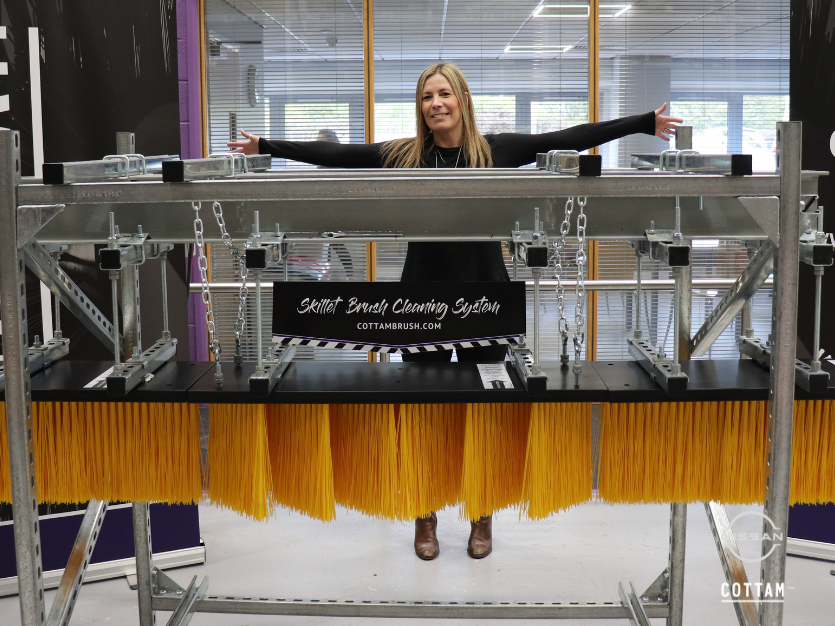
- Proposal & Manufacturing: Upon project approval, Cottam delivered a detailed proposal and timeline. The system was then manufactured at our Hebburn facility. Nissan’s team was invited to review the finished product before installation.
- Seamless Installation: The brush system was strategically packed and shipped with easy-to-follow instructions, allowing Nissan’s in-house team to install it without any hassle. Cottam followed up with a site visit to observe the system in action.
The Outcome
Nissan opted for both systems designed by Cottam: one to clear debris from the top of the skillet and another to clear debris from the pit below.
Initial Results:
- Production Line Stops: Since the installation of the brush systems, the production line hasn’t stopped once due to debris.
- Cost Savings: Nissan has saved a significant amount of money, previously lost to downtime—potentially tens of thousands of pounds.
Conclusion
The custom skillet brush system provided by Cottam has proven to be a highly effective solution for Nissan, virtually eliminating the debris issues that were causing costly interruptions. This collaboration highlights the value of tailored engineering solutions in enhancing production efficiency and reducing operational costs.